OUR SUSTAINABILITY APPROACH
How we develop biodegradable and compostable alternatives around the practical demands of everyday supply.
Sustainability is a product development decision. The material, the amount used, the way a product performs and what happens after use all matter. BioLine brings those decisions together across the everyday products businesses consume in volume.
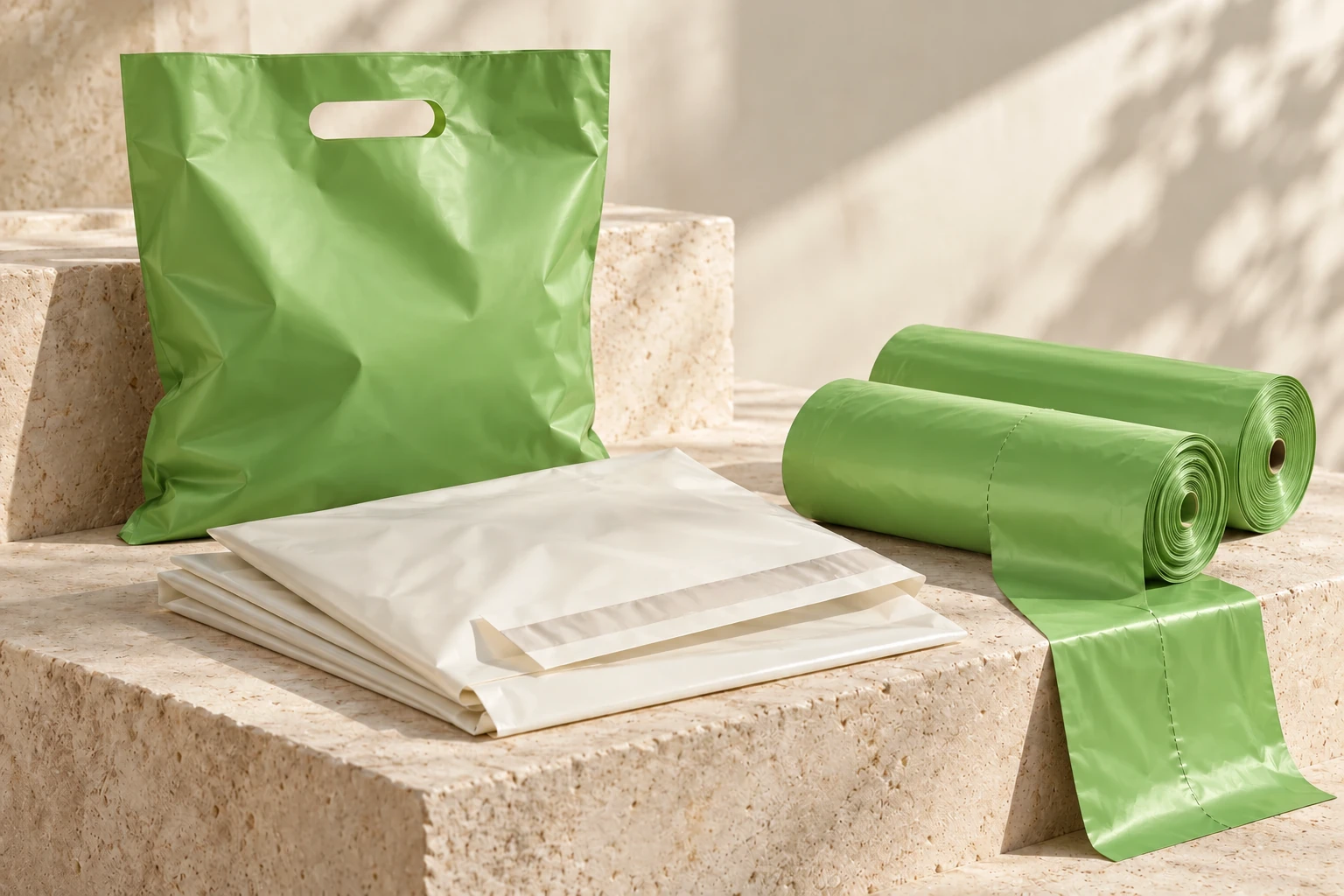
We have developed our biodegradable and compostable range to serve practical applications: protective essentials, waste collection, retail and grocery packaging, mailers and other single-use consumables. Each category has a different job to do. Our approach is to improve the material choice while protecting that function.
A waste liner needs dependable seams and load capacity. A retail bag needs carrying strength and a considered finish. A mailer needs a secure closure. Protective products need fit, usability and the appropriate level of protection. These requirements shape the product from the outset.
We distinguish between biodegradable, compostable and bio-based materials, rather than treating them as interchangeable. The choice depends on the application and the supporting evidence. Compostable packaging and biodegradable PPE can sit within the same range while having different material properties and disposal routes. Compostable food-service gloves are a separate product category from biodegradable nitrile medical gloves, with their own intended use and supporting documentation.
Dimensions, thickness, closures, pack quantities and branding influence how efficiently a product works in your operation. We consider these details together, so a material change can be introduced through familiar processes and practical supply formats.
Relevant product specifications, certification and test documentation support selection and procurement. We explain what a claim covers and keep material characteristics separate from protection, hygiene and regulatory requirements.
Businesses do not need to change every consumable at once. A focused transition can begin with a frequently used product, a defined specification and a suitable alternative.
Our aim is a more considered approach to everyday consumption. That means making useful alternatives available and explaining their capabilities clearly.
We do not treat a material label as proof of a universal environmental benefit. Actual impact depends on the product, how much is used and how it is managed after use. Where an environmental comparison is needed, it should be supported by evidence for that application.
Discover the materials and product formats in our range, with samples selected for your application.