COMPOSTING & DISPOSAL
How home and industrial composting differ, and how product type shapes the appropriate collection and disposal route.
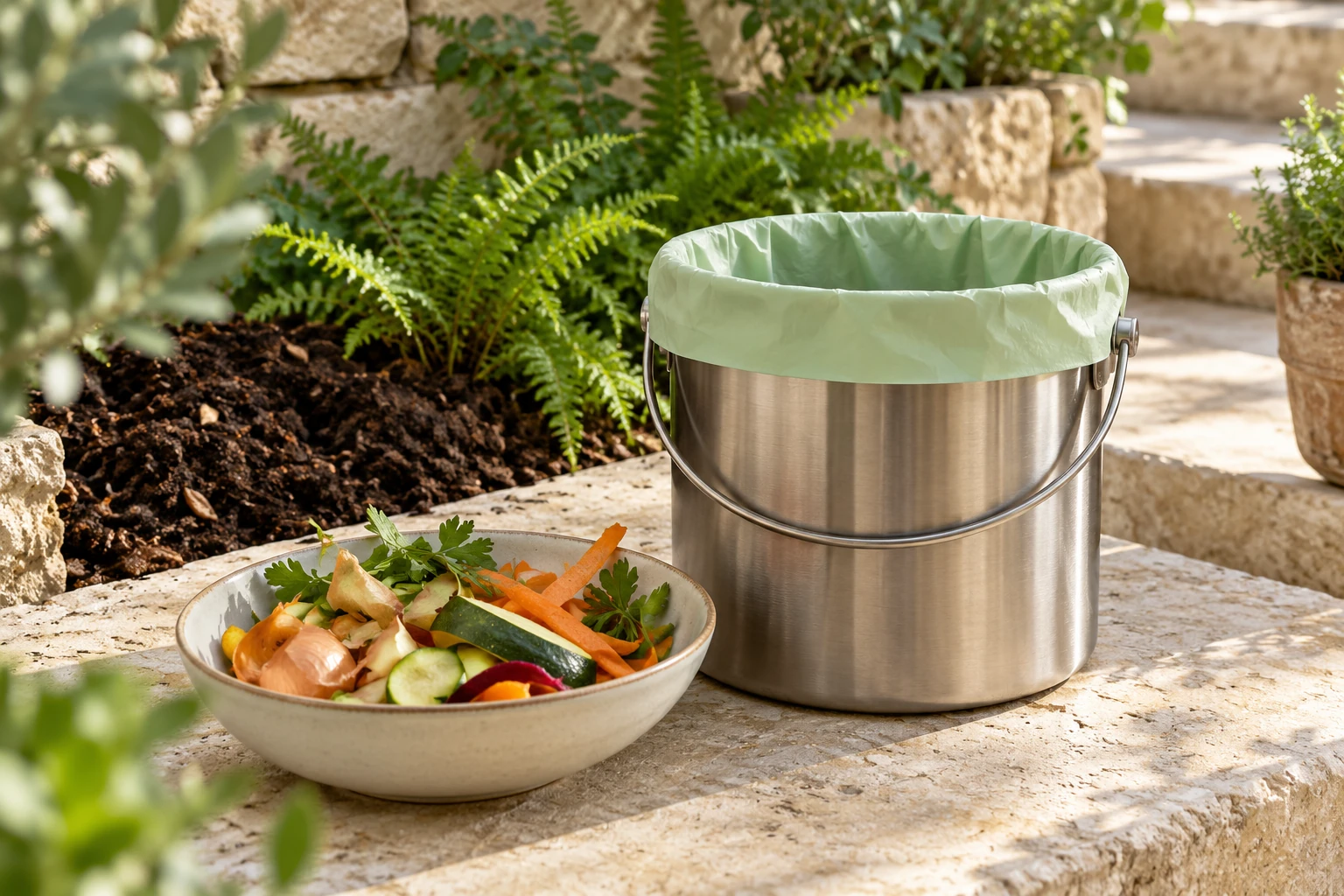
Composting uses microorganisms to transform suitable organic material into compost. Oxygen, moisture, temperature and time all influence the process. Certified compostable products are assessed for defined conditions within that process.
The distinction between home and industrial composting matters because the environments are different. Collection systems also differ: a food-waste service may use industrial composting, anaerobic digestion or another treatment route, and its accepted materials reflect that system.
LOWER-TEMPERATURE CONDITIONS
Home composting takes place in a garden heap or suitable domestic composting system. Temperatures are generally lower and less consistent than in a commercial facility.
Home-compostable certification, such as OK COMPOST HOME or assessment to AS 5810, addresses this type of environment. A functioning compost system still needs a suitable balance of organic material, moisture and air.
IDENTIFIED BY THE RELEVANT HOME-COMPOSTABILITY MARK.
CONTROLLED TREATMENT CONDITIONS
Industrial composting facilities manage temperature, aeration and moisture as part of a controlled process. These conditions differ from a garden compost heap.
Industrial compostability schemes and standards include OK COMPOST INDUSTRIAL, Seedling, BPI commercial certification and AS 4736. Their scope relates to the specified treatment conditions.
INTENDED FOR AN ACCEPTING COMMERCIAL TREATMENT SYSTEM.
| PRODUCT TYPE | INTENDED ROLE | AFTER USE |
|---|---|---|
| Compostable food-waste liners | Contain and collect organic waste. | Collected with organics where the service accepts the specific certified liner. |
| Compostable retail & produce bags | Carry and protect products. | Home or industrial composting according to the product certification and route available. |
| Compostable mailers & packaging | Protect goods during handling and delivery. | The product’s certified composting route; any separate non-compostable components follow their own disposal instructions. |
| Biodegradable PPE | Provide protection for its specified application. | The applicable workplace or clinical waste stream. Biodegradability alone is not a composting instruction. |
| Clinical & contaminated consumables | Support clinical handling and infection control. | Managed under the organisation’s infection-control and regulated waste procedures. |
A successful collection system keeps accepted materials together and contamination out. Clear bin labels, consistent liner formats and simple staff guidance make the route easier to follow in busy environments.
Compostable packaging belongs in the route assigned to that product, rather than automatically in conventional plastic recycling. Industrial compostability does not establish suitability for home composting, and neither claim is permission to litter.
Local acceptance is determined by the collection and treatment operator. MedSafe provides the product’s material and certification information to support that arrangement.
Compostability does not mean that a material belongs in conventional plastic recycling. Use the disposal route stated for the product; compostable polymers can be incompatible with those recycling streams.
No. Home-compostable certification relates to a composting environment. It does not establish biodegradation in soil, rivers or the sea, and does not justify littering.
Food-waste services use different treatment technologies and acceptance rules. A certification describes the product’s compostability, while the service determines which items it processes.
A biodegradability claim alone does not establish compostability. Gloves and other protective products follow their specific disposal instructions, with clinical and contamination requirements taking priority.
TECHNICAL REFERENCES: TÜV AUSTRIA · EUROPEAN BIOPLASTICS
Our team can provide the certification and disposal information for your chosen MedSafe product.